The operating system for autonomous air operations. Command & control, mission autonomy, resilient mesh networking, GPS-denied navigation, and an open SDK—unified in one platform.
AERIS unifies the software, autonomy, and connectivity your fleet needs to execute complex missions with minimal operator overhead. From first response to force protection—one operator, one interface, hundreds of drones.
Mission graph orchestration, policy gating, and real-time ops board for fleet-wide coordination.
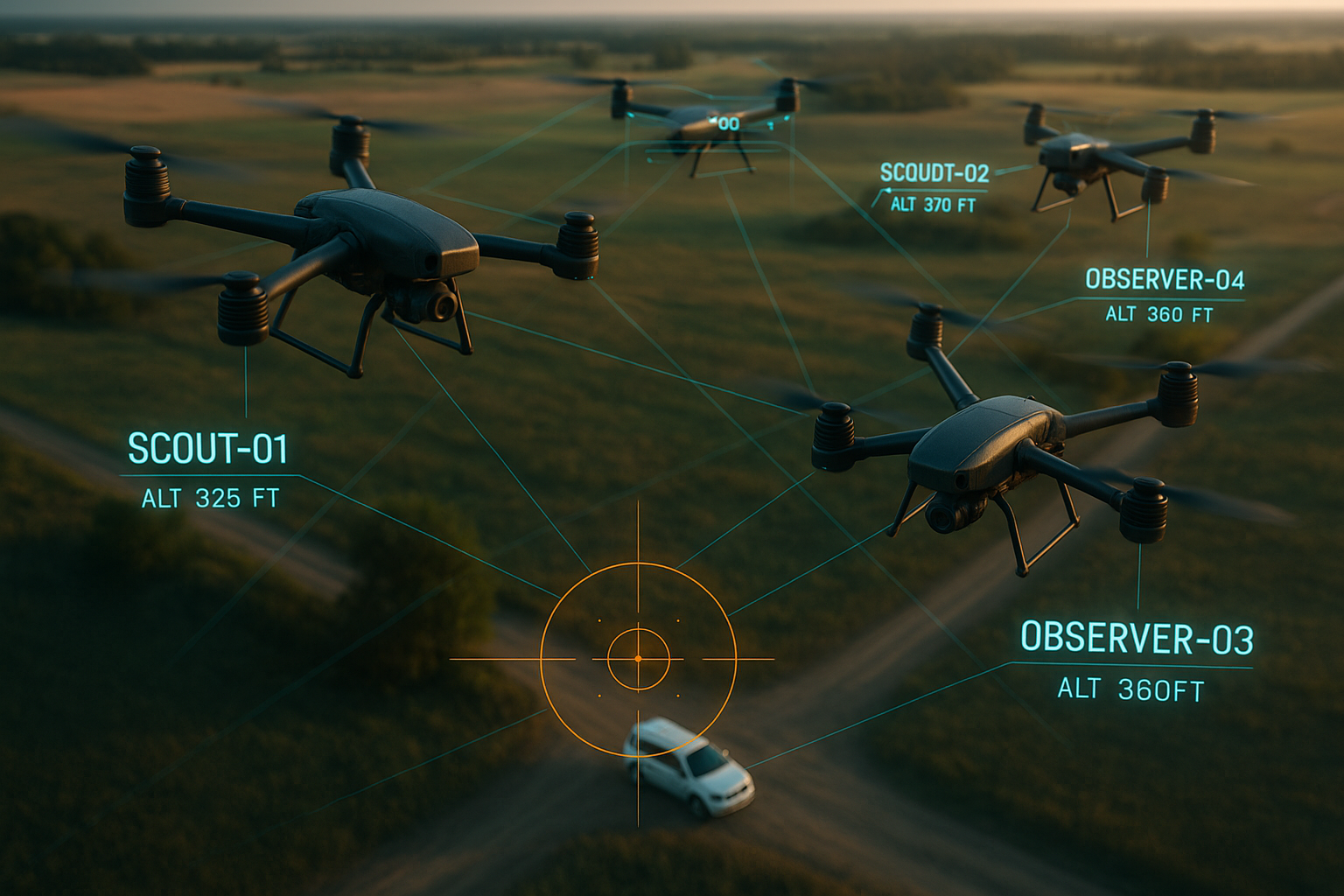
Behavior library and multi-asset coordination with dynamic role assignment and handoffs.
Multi-bearer, self-healing comms with automatic relay positioning and link policy profiles.
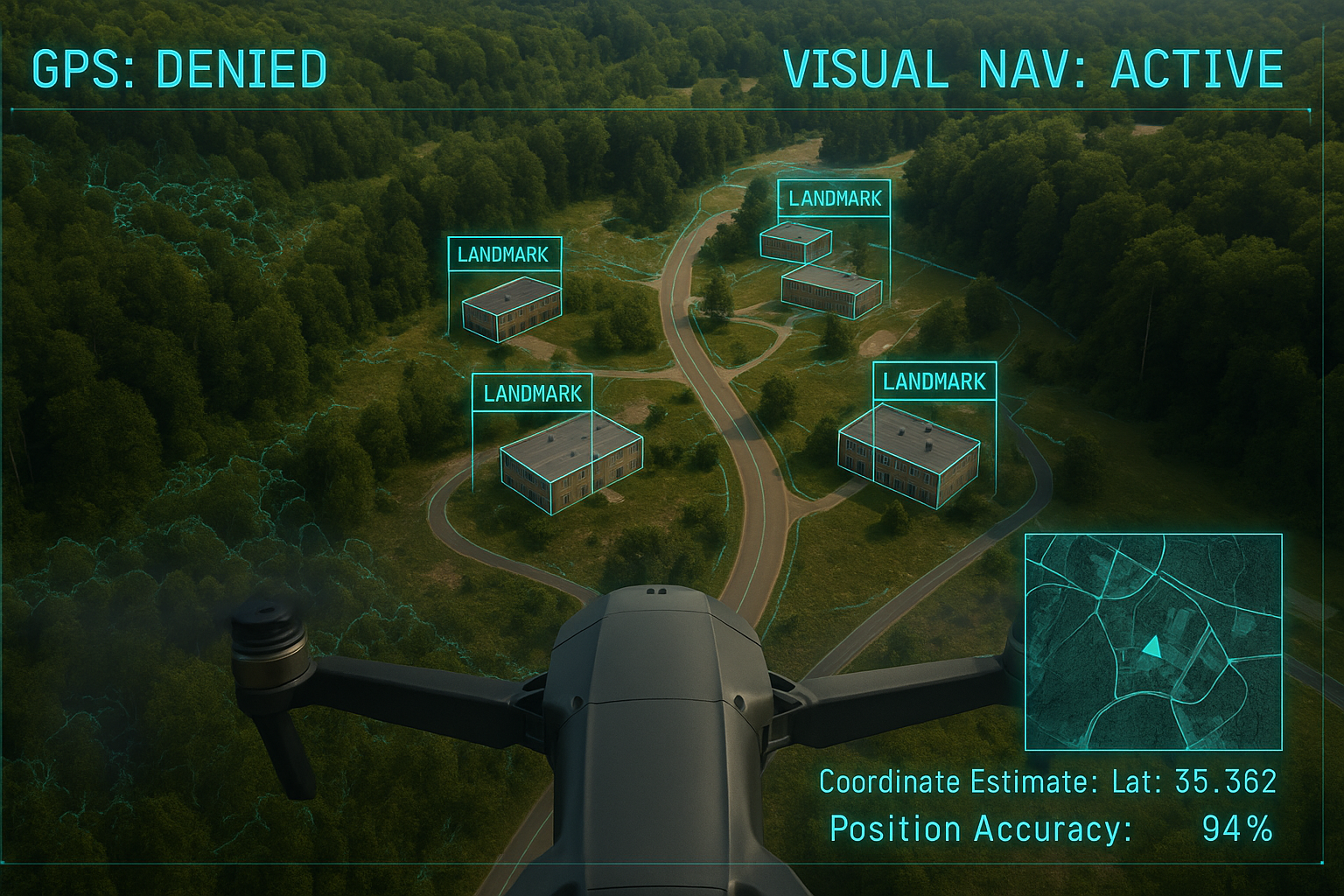
GPS-denied navigation with visual-inertial odometry and terrain-relative matching.
Onboard AI inference with sensor fusion, model hot-swap, and safety envelopes.
Fleet management, mission archive, compliance exports, and SOC/CAD integrations.
Security and compliance framework with device attestation and audit-by-default.
Simulation and digital twin for mission rehearsal, policy testing, and training.
AERIS Command is the brain of your autonomous operations. Operators define goals and constraints—search an area, protect an asset, intercept a track—and the mission graph engine translates those into coordinated drone behaviors.
Policy gates enforce rules of engagement, requiring human authorization for sensitive actions. Every autonomy decision is logged with its inputs and reasoning, ensuring full auditability for after-action review and compliance reporting.
Our behavior library includes sector sweep, contour follow, multi-angle fixation, pursuit/intercept, loiter/relay, and grid mapping. Drones dynamically take on roles—Scout, Overwatch, Relay, Interceptor—and hand off responsibilities as missions evolve.
The autonomy engine manages deconfliction, airspace separation, and failure recovery. If a drone goes offline, the fleet automatically redistributes coverage and tasks to maintain mission continuity.
AERIS Mesh combines MANET, LTE/5G, and SATCOM failover with intelligent link scoring and automatic relay positioning. When jamming or terrain degrades a link, the system autonomously repositions airborne relays to restore connectivity.
Link policy profiles—low_latency, long_range, jam_resistant—let operators optimize for mission needs. All traffic is encrypted end-to-end with QUIC/TLS 1.3.
Extend AERIS with custom payloads, analytics, integrations, and behaviors using our comprehensive developer toolkit.
TypeScript & Python
C2 control, mission graph authoring, live telemetry streams, and event subscriptions.
C++
Payload integrations, custom behaviors, and model lifecycle management for onboard processing.
REST & gRPC
Data export, webhooks, audit logs, and single sign-on for enterprise integrations.
React Components
Embeddable map, timeline, and mission widgets for custom dashboards and SOC integrations.
Subscribe to real-time events: campton.mission.state_changed,
campton.target.tracked,
campton.uas.detected,
campton.link.degraded,
campton.nav.relocalized
Join our ecosystem of payload partners, CAD/SOC integrators, analytics providers, and training centers. Certification levels: Module, Integrated, AERIS‑Native.
Become a PartnerAERIS integrates with your existing systems through industry-standard protocols and APIs.
STANAG 4586 (C2), STANAG 4609 (video), MISB 0601 (KLV metadata), Cursor-on-Target (CoT)
CAD integration (webhooks/REST), ONVIF (VMS), ATAK plugin, NIEM-compliant reporting
MAVLink/RTPS, Remote ID (FAA/EASA), ROS 2 for research, DDS for real-time comms
SSO (SAML/OIDC), SIEM (syslog/CEF), Webhooks, gRPC, GraphQL, OpenAPI documentation
Request access to Forge SDK documentation, schedule a technical deep-dive, or explore partnership opportunities.